Pole Barn vs. Barndominium: What’s the Difference in Delaware?
 Click on the above image to view it in its full size.
If you’ve been researching rural builds in Delaware, you’ve probably seen a few terms pop up: combination buildings in Delaware, pole barns and barndominiums.
At first glance, they look similar. Post-frame construction. Metal siding. Wide open interiors. But they are not the same thing, especially once you factor in building codes, financing, and long-term livability. If you’re deciding between the two, here’s what actually separates them.
Start with the structure: what a pole barn really is
A pole barn is traditionally an agricultural or storage structure. It uses post-frame construction, meaning vertical posts are set into the ground or mounted to a foundation, supporting roof trusses and exterior panels.
It’s efficient. It’s strong. It’s practical.
But most pole barns are not designed from the beginning as residential dwellings. They may not include insulation, finished interiors, HVAC systems, or residential plumbing unless specifically upgraded.
That’s where the difference begins.
A barndominium is built as a home from day one
When you work with custom barndominiums in Delaware, the structure is engineered and permitted as a residence.
That means:
- Residential foundation requirements
- Code-compliant insulation
- Electrical and plumbing systems
- HVAC designed for living space
- Egress windows and fire safety compliance
A pole barn can be converted into living space later, but a barndominium is designed for that purpose from the start.
That changes everything, from financing to resale.
Code and permitting differences matter
In Delaware, residential structures follow stricter standards than agricultural buildings.
Working with experienced barndominium builders in Delaware ensures the build meets residential codes from the beginning.
If you start with a standard pole barn and later attempt conversion, you may face additional inspections, retrofits, or engineering upgrades. It’s cleaner to build it right the first time.
Financing separates them quickly
Lenders treat residential homes differently than agricultural structures.
A finished home built by a reputable barndominium construction company in Delaware qualifies for standard construction-to-permanent loans.
A pole barn without residential classification typically does not. If long-term financing flexibility matters to you, the distinction becomes significant early in the process.
Where combination buildings in Delaware fit in
Here’s where the conversation gets more nuanced. Some buyers don’t want just a house. They want living space combined with a workshop, garage, or storage area. That’s where combination buildings in Delaware come into play.
Unlike a basic pole barn, combination buildings in Delaware are intentionally designed to blend residential and functional space within one engineered plan. The living quarters are fully code-compliant. The shop or storage side is integrated structurally, not added as an afterthought.
That integrated design gives combination buildings in Delaware a distinct advantage over converting a traditional pole barn later. They are built for dual-purpose use from the beginning.
.
.
Interior finish levels make a visible difference
Walk inside a finished barndominium and you’ll see drywall, cabinetry, flooring, lighting, and trim work similar to any modern home. Many property owners consult with a shop house builder in Delaware to create open layouts that feel residential while still maintaining workspace functionality.
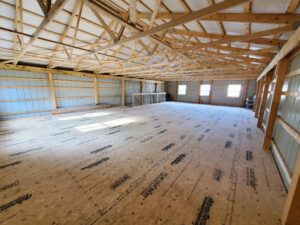
A standard pole barn interior usually starts unfinished. No framed rooms. No climate control. No residential finishes. Converting one means adding everything later, insulation, framing, electrical, plumbing, often at a higher cost than designing it correctly upfront.
Structural similarities, practical differences
Both pole barns and barndominiums often use post-frame systems. Both can feature metal exteriors. Both can have wide interior spans. The difference is in purpose.
Builders who specialize as a barndo builder in Delaware plan for residential comfort from the foundation to the roofline.
Pole barns prioritize storage or agricultural function unless upgraded. It’s not about which is stronger. It’s about which is designed for living.
Resale considerations
A finished barndominium marketed as a home appeals to buyers looking for flexible living space. A pole barn without proper residential classification appeals to a much narrower group.
That’s why many homeowners choose to work with established barn house builders rather than attempting a conversion project later.
Residential classification affects appraisal, insurance, and buyer perception. Purpose-built structures hold value more consistently.
So which one should you build?
If you need a storage building, agricultural structure, or workshop with no immediate plans for living space, a pole barn works well.
If you want a home, especially one that integrates workspace, garage space, or equipment storage, a barndominium or properly engineered combination structure makes more sense.
Combination buildings provide that middle ground. Residential comfort on one side. Functional space on the other. One roof tying it together.
Trying to retrofit a pole barn into that setup often costs more than designing it correctly the first time. The difference isn’t cosmetic. It’s structural, legal, and financial.
FAQ
Can a pole barn be converted into a home?
Yes, but it requires meeting residential building codes, which may involve significant upgrades to insulation, plumbing, electrical systems, and structural elements.
Are combination structures harder to insure?
Not when they are built and classified as residential dwellings. Proper documentation simplifies insurance and financing.
Is a barndominium more expensive than a pole barn?
Upfront, yes, because it includes full residential systems. Long term, it avoids costly retrofits.
Ready to start your farm or storage project? Reach out to us online at Fetterville Pole Buildings to fill out a form or call us at 1-800-331-1875.
.
.
We help farmers. We help homeowners. We help businesses build the space they need to grow.
We listen. We design. We deliver custom Fetterville pole buildings that stand the test of time. We’re creating the best pole building dedicated to your tastes.
Follow us on Facebook for updates, project highlights, and inspiration for your own building plans.